
Advanced Myopia Control Solutions for Clearer Vision and Healthier Eyes
Myopia control
Myopia control involves a range of strategies aimed at slowing the progression of nearsightedness (myopia) in children and young adults. The primary goal of these interventions is to reduce the risk of developing high myopia, which is associated with serious ocular complications such as retinal detachment, glaucoma, and myopic maculopathy. Early and effective myopia control can significantly improve long-term eye health and visual outcomes.
Orthokeratology (Ortho-K) Lenses
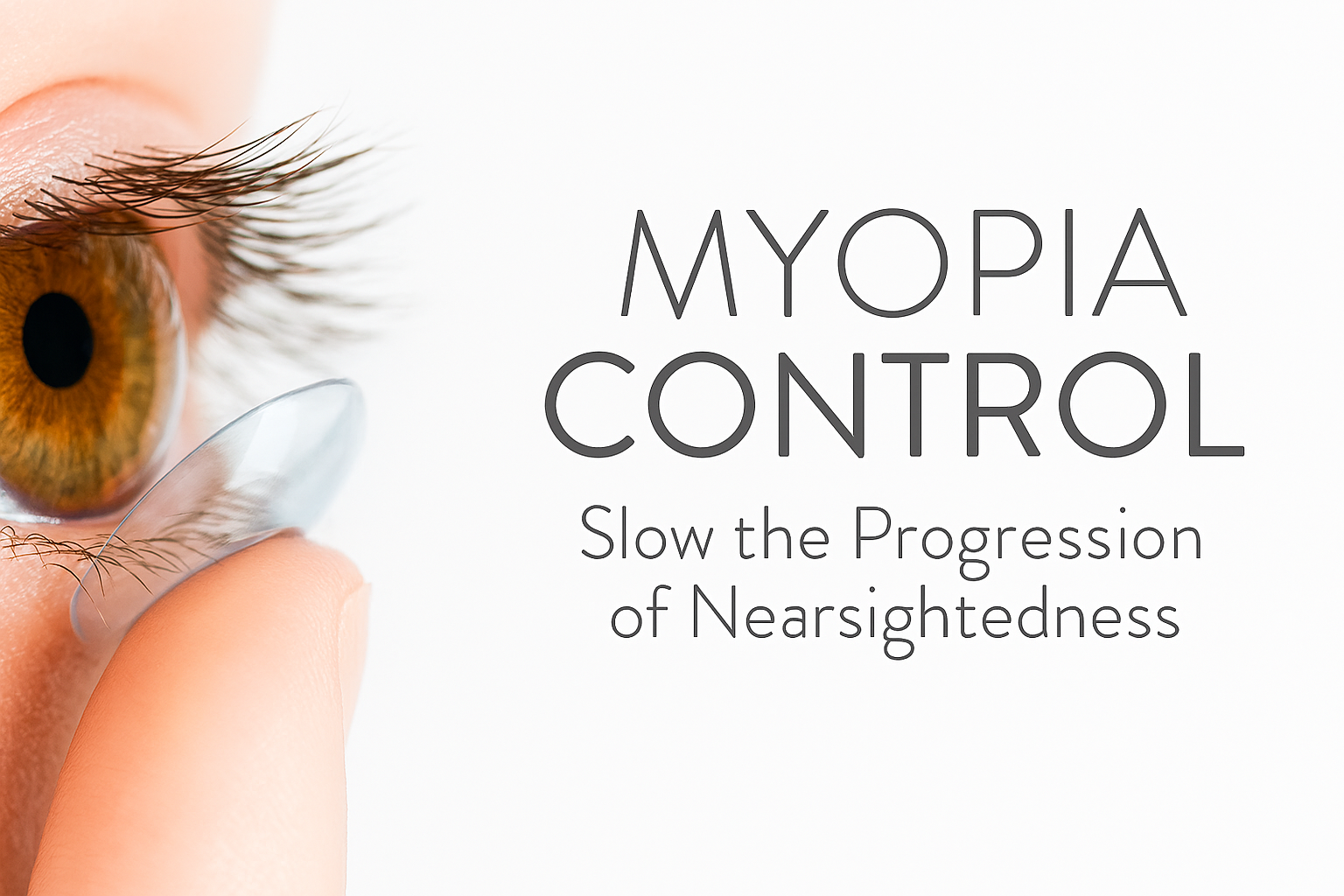
Orthokeratology, commonly referred to as ortho-k, utilizes specially designed rigid gas permeable lenses that are worn overnight. These lenses temporarily reshape the cornea, flattening its central curvature to correct refractive error. By reshaping the cornea during sleep, ortho-k lenses provide clear, unaided vision throughout the day without the need for glasses or contact lenses. Beyond vision correction, ortho-k has been shown to slow axial elongation of the eye, which is a key factor in myopia progression. The reversible nature of ortho-k, combined with its non-surgical approach, makes it an attractive option for pediatric myopia management.
Soft Contact Lenses for Myopia Control
Various soft contact lenses have been developed specifically to control myopia progression. These lenses often incorporate multifocal or dual-focus designs, which aim to modify the focus of light on the peripheral retina. This optical design reduces the stimulus for eye growth and myopia progression by creating simultaneous images, helping to slow axial elongation. Soft multifocal contact lenses are highly popular due to their ease of use, comfort, and ability to correct vision during waking hours. They are typically prescribed to children who are eligible for contact lens wear and are motivated to maintain consistent use.
Myopia control - more options
Atropine Eye Drops
Atropine eye drops represent a pharmacological approach to myopia control. Low-dose atropine (often 0.01% to 0.05%) is used to dilate the pupil and temporarily paralyze the accommodation reflex of the eye. While its exact mechanism in myopia control is not fully understood, atropine has been demonstrated in multiple clinical trials to effectively slow the progression of myopia with minimal side effects at low concentrations. The drops are typically administered once daily, making the treatment relatively easy to incorporate into a child’s routine. Careful monitoring by an eye care professional is essential to manage potential side effects, such as light sensitivity and near-vision difficulties.
Ophthalmic Lens Options for Myopia Control
Specialized ophthalmic lenses designed for spectacles also play a critical role in myopia management. These lenses may feature multifocal or defocus designs that alter the peripheral image focus, similar to soft contact lenses. Some advanced spectacle lenses incorporate aspheric or segmented optical zones aimed at reducing peripheral hyperopic defocus, which is linked to myopia progression. Spectacle lenses offer a non-invasive, convenient, and widely accessible option for myopia control, particularly for children who may be unwilling or unable to wear contact lenses or use atropine drops.